
CVS Health plans to spin its ~9,000 stores into a standalone CVS Pharmacy company. Q3 results were strong, but owners should understand how the split could change the credit behind their lease.
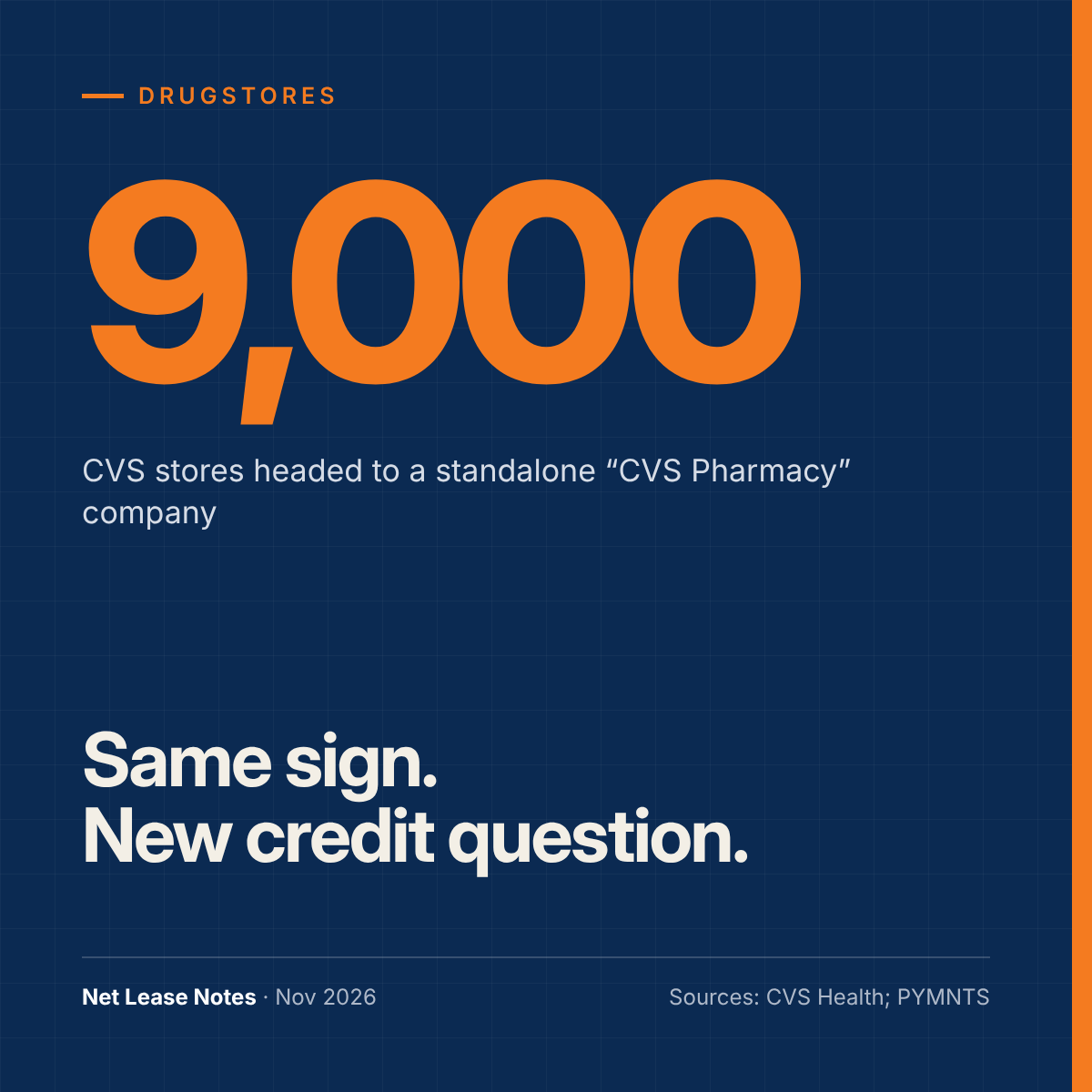
On November 4, CVS Health announced plans to separate into two public companies. CVS Health would keep Aetna, CVS Caremark, Oak Street Health and Signify Health. A new company, CVS Pharmacy, would take roughly 9,000 retail pharmacies, mail pharmacy and MinuteClinic.
The news came alongside a strong quarter. CVS's Pharmacy & Consumer Wellness segment grew adjusted operating income 10.6% to $1.6 billion, helped by prescription files acquired from Rite Aid. Prescriptions filled rose 1.9% to 470 million, and the company raised full-year guidance.
CVS store operations look healthier than they have in years. But when the credit behind a lease changes, buyers re-underwrite. Owners who know their lease terms will be in the best position either way.
Thinking about selling a net-leased property? Contact the Hernandez O'Neill Group for a complimentary property evaluation.
Follow Jason Hernandez on LinkedIn
Source: PYMNTS – CVS Will Split Pharmacy Business Into Separate Company (Nov 2026)